
Ed. Note: As part of DAR Gaming Week, I’ll analyze some of the reasons why Sega’s last console was all but doomed from the start–even though, truthfully, it could have been saved (even with its many flaws)
Sega, in its last years as a console maker, made a lot of mistakes. Let’s be clear in that I won’t be speaking solely as a Sega apologist. I know they screwed up. But, with that said, the Dreamcast was, as the title states, doomed from the start. But, truth be told, it may’ve been able to be salvaged. In this piece, I’ll get into both of those points.
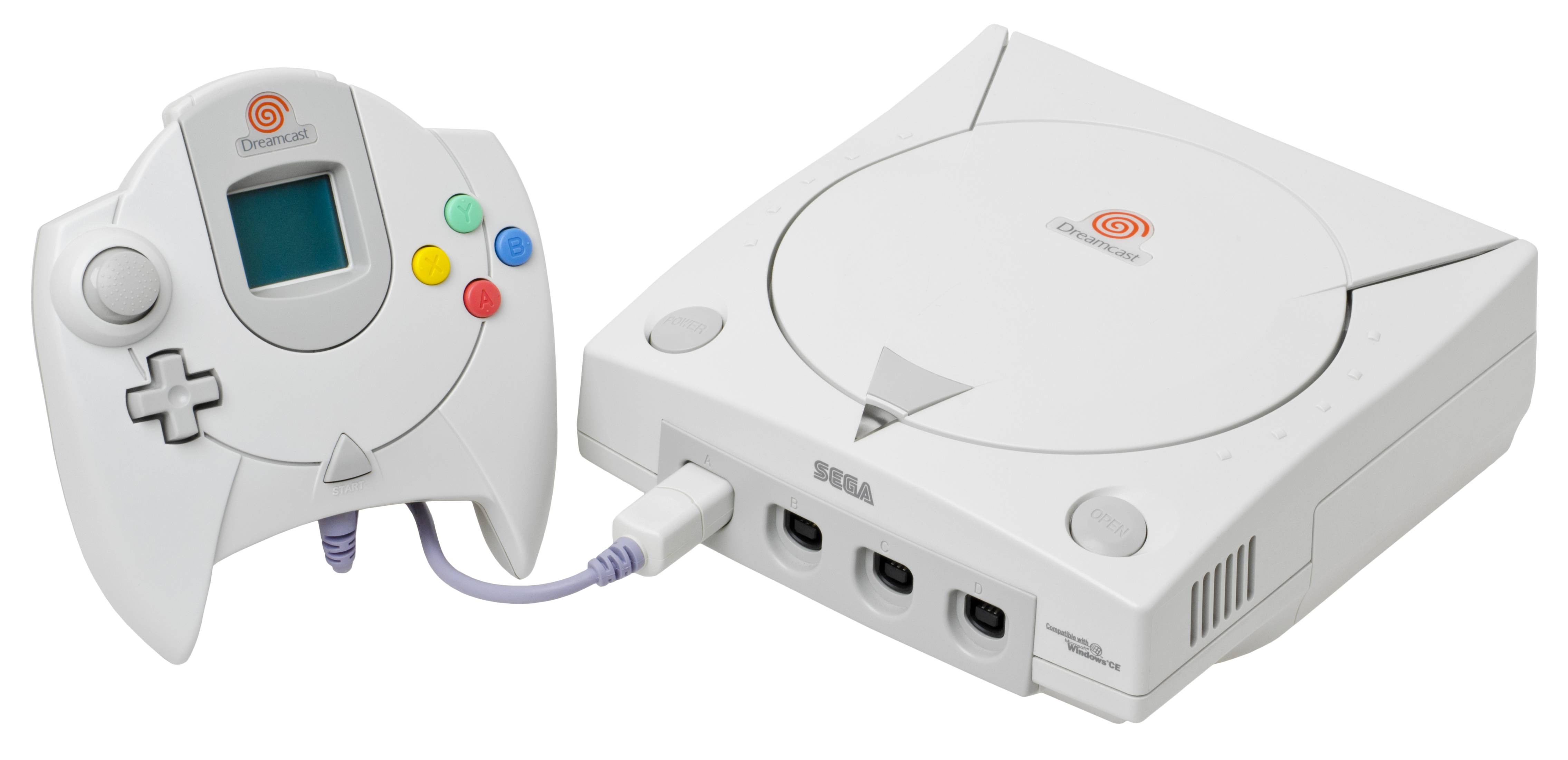
Just as the Sega 32X “add-on” console before it being a stopgap between the legendary Genesis and the not-so legendary Saturn (not to mention, ya know, the N64 and PlayStation consoles), the Sega Dreamcast was an ambitious console that essentially served as an expensive stopgap until the PlayStation 2, XBOX, and Nintendo GameCube consoles were released. Yes, we got Sonic Adventure, the beginnings of two of the most-storied sports sims in NFL 2K and NBA 2K, and the classic RPG Shenmue out of it. Yes, in the West, the Dreamcast had one of the best console launches of all-time, financially-speaking. And yes, it was one of the first consoles that successfully–sort of–achieved online multiplayer capabilities.
But, for every success, there was a failure.
_files/20b.jpg)
For starters, let’s look at its specs and launch. Releasing at a time where Sony and Nintendo were king, the Dreamcast could’ve carved out a huge niche for itself as that hardcore system that still had a mainstream sensibility to it. But, even releasing the console on time proved to be a monumental task.
The original PowerVR chipsets in the Japanese version were scarce at time of initial production, which dampened sales; demand trumped the number of consoles which were initially released. That’s without even getting into many details about the PowerVR lawsuit which arose. After this, key launch titles such as Sonic Adventure, were delayed. On top of that, Sega opted to use its own GD-ROM discs versus DVDs for its games, therefore alienating people who may’ve used the console as a multifaceted entertainment system (like the PS2 after it). Plus, there were rumors that Sega’s president at the time didn’t really care how or get why a console should be marketed. So, for those counting at home, that’s already four failures and we haven’t even gotten to the Western release of the console.
In the West, as mentioned, the system fared better for a while. It was new and toted better graphics than the PlayStation. Plus, games such as Sonic Adventure and the 2K Sports games were prepped for the Western release.

The marketing campaign in the States and abroad was even more aggressive for a console that was already, in Japan, popular but nowhere near profitable. However, Sega suffered a major loss when it could not procure Electronic Arts (EA) for its console. Financially, of course, it was close to impossible. And while we got the 2K Sports games out of it, people were still hesitant to go to a console that didn’t have Madden, the sports game which reigned supreme in the U.S., or its EA Sports counterparts (even though, let’s be real: NBA 2K was almost always better than its NBA Live counterpart, Jordan-in-Live exclusivity, EA Trax and all). But, the console was released, after the aforementioned campaign, for $199, which set it up to have one of the best console releases of all-time.
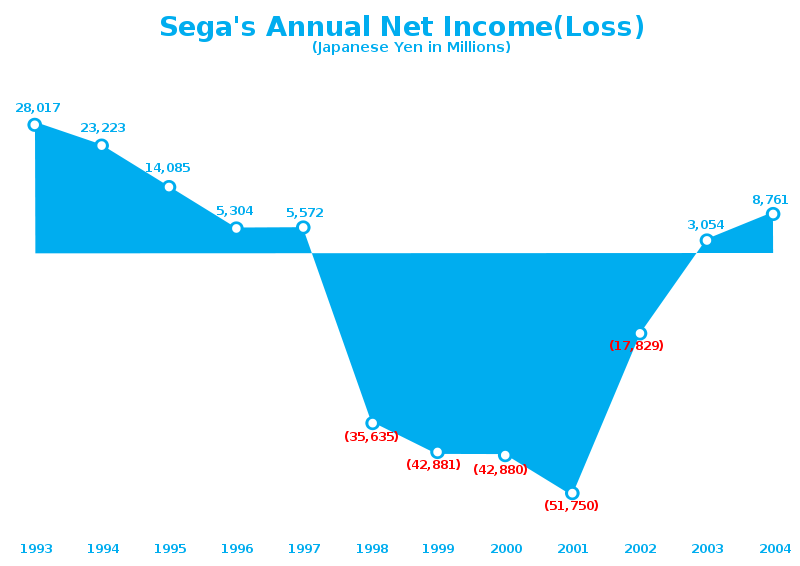
Sega, in some ways, seemed to have done it. They’d achieved success without EA (and SquareSoft, later Square Enix, which kept its exclusivity deal with Sony going), they were rolling out exclusives that made the Dreamcast the “go-to” system for a while, and it had a pretty sizable portion of the North American market share for gaming. In Europe, the console was selling well also. And while the company’s net income was still in the red, the losses had plateaued a bit after the failure which was Sega Saturn.
And then, the Emotion Engine buzz and the PS2 tech demos happened.

 speedonthebeat.com
And your fact-based opinion is full of bias. I don't see that you know how marketing works. True things could have been done differently but if you were in that situation would you really have done what you just said you would do?
LikeLike
Hi Adam,I do, in fact, know how marketing works. The examples are pure hypotheticals (hence their simplicity; I don't care enough to drop an entire rollout plan, but I could). The Dreamcast, in some ways, was already doomed by the fact that Sega was hemorrhaging money after everything that went down with the Saturn. With that in mind, would I have held off on the release until everything was perfect, considering that it was sink-or-swim? Heck, no. I would've pulled every trick out of my bag, like Sega did. However, again, the Dreamcast was the ultimate catch-22. It probably wouldn't have mattered if my ideas, your ideas, or Peter Moore's ideas combined succeeded.Speaking of which, what would your plans have been? Not trying to start some sort of war of words. I'm just open to hearing how you would've approached it.And, in some ways, you're right. I love the Dreamcast and I'm biased in the sense that I wish that Sega could've stayed in the console market.Peace be with you,Speed on the Beat.
LikeLike