
I was a college student at the University of Maryland, in possession of my first iPod (an iPod with a busted screen that, somehow, still plays music, movies and videos to this very day) and my first debit card. Perusing through the then-burgeoning iTunes Store, I found exactly what I was looking for that Tuesday: Lupe Fiasco’s debut album Food & Liquor, a sixteen-track (20, if you count the bonus tracks from the 5th Anniversary Edition) masterpiece from the Chicago native. I had expectations for Fiasco. I wanted him to take the world by its throat, yell in its face with his lyricism and storytelling, and proclaim why he was one of the best new artists to grace the planet.
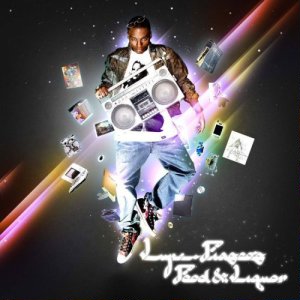
Somehow, even with that in mind, Food & Liquor blew my, and many other listeners and critics’, lofty expectations out of the water. Sure, I debate with friends over whether it or The Cool is Lupe’s best album, to this very day. But, F&L caught my attention, never let it go, and just gave me a classic album I could play walking to SOCY 105 or to Easton Hall to hang with Drizzle Sez (yes, the Profound Assholes thing goes deep). Ten years later, does Food & Liquor hold up? Or does it fall victim to my youthful naivety that also thought that MIMS and Board Bangers would rap about something other than why they (or the beat) were “hot” after a while and have fruitful careers?
PLEASE NOTE: THIS WILL NOT BE A REVIEW FOCUSED ON THE FULL STORY OF MICHAEL YOUNG HISTORY OR ANY OF THE PLAYERS IN HIS STORY. IT WILL SOLELY BE FOCUSED ON THE MUSIC AND STORY PRESENTED WITHIN F&L. ADDITIONALLY, WE WILL SOLELY FOCUS ON THE ORIGINAL VERSION OF THE ALBUM (EVEN THOUGH THE 5TH ANNIVERSARY EDITION IS FEATURED BELOW).
“Just Might Be OK” is needed right after “Real.” It acknowledges that, while the situation we find ourselves in may not be ideal, if we combat the vices, we might make it out. It’s optimistic, but still realistic. You’re also given vocals from Gemstones/Gemini. His voice gives the listener that soul so often missing on tracks like this. Also, Lupe’s verses are greatness. His flow is perfect for this track, emphasizing the highlights of the track while still letting listeners get a view into his mindset and his desire to enact change. Additionally, we’re given a healthy dose of Lupe’s storytelling ability.
Now, this may come as a surprise. But, I’m not the biggest “Kick, Push” fan.
I love the story. However, and it may be because it was overplayed in some ways, it’s a track that I’m not the biggest fan of. I love it, but I still can find myself skipping over it at times. The song is still great, especially because of its intricate-but-laid-back nature. It, as Lu’s first big single, fulfills its purpose. I’m more a fan of its sequel, “Kick, Push II,” but that’s just a personal choice. More on that later, though. Let’s get back into the rest of the album.
These innocent creatures and moments, they’re always at risk of being corrupted by the fact the mainstream’s making cocaine cool, the “titties closer to the 22s” and the champagne. However, for us to prosper, we’ve got to get rid of those ills. By focusing more on the innocence still in our society, we can foster growth. The ills are there, and you can’t completely ignore them, but you’ve got to do your best to avoid them. That’s part of my analysis on the track. I could be wrong.
The track goes. Aided by the lovely Jill Scott on the hook, the I Monster-sampling track is just beautiful. It’s haunting as hell, too. Considering the dreamy atmosphere brought through the sample and Scott’s vocals contrasted with the images Lupe conjures up, you can’t help but analyze and take this song in. It leads you into this pretty sick sample rabbit hole. I’m always for sample rabbit holes. They’re so delicious and this one showcases Lupe’s ear for having his producers dig all the way into the crates and pull out beautiful music.
Lupe continues this beautiful darkness into the Kanye West-produced “The Cool.” Again, I won’t go in-depth about Michael Young History’s story. I won’t go too much into the mystique of The Cool, as much as I want to. I’ll just say that, if you want to understand Lupe’s mindstate and critiques on modern culture, this is a great place to start.
We love our mama, but we’re quick to call a woman who wronged us a “hoe” or a “bitch” or what have you. We love our environment, but some of us continue to push poisons into said environment because that’s what we were taught. Lu wants to break the chains that oppress his people, but knows that his weapon of choice is, at times, part of the “problem.” That’s not to blame hip-hop for all of society’s ills, but it’s something that needs to be said. Rap music does sometimes glorify foolishness without speaking on the negatives of said foolishness. Back to “Hurt Me Soul” as a piece of music, it’s a track that you need in your wheelhouse if you consider yourself a Lupe fan (or just a fan of that so-called “real spit”). It’s got bars, but it’s not just for the sake of having bars, and the beat knocks–even though it’s kind of a melancholy beat.
“American Terrorist” is a product of its environment, just like “Hurt Me Soul” is a product of its environment. In a world where George Bush’s policies towards terrorism still ran rampant, and a world where Osama was still alive, we were all on edge. I’m not saying we’re not now. But, back then, it was a “fresher” concept, since we were attacked on American soil by extremists several times in the preceding years (OKC with McVeigh, 9/11, the 1993 WTC bombing, etc).
The extreme paranoia created from these incidents, like now with ISIS, police-involved shootings, and so on, led to a state that sometimes made us question our own country’s dealings with these terrorists. I mean, America did create Gitmo in its most “memorable” state and the Abu Ghraib incident was an actual thing. You’ve got to look back at the racism and hatred America was founded on. I love America, but I know that it’s got its skeletons. “American Terrorist” is Lupe’s “America” (the Prince track from Around the World in a Day). It’s dark but brightly presented, incredibly sardonic in its approach, and it captures the rebellious spirit so effectively. Additionally, it details how America has been pretty terroristic in its rise to prominence as well.
People who love Lupe but forget he’s a political artist, they usually get fake offended by tracks like “American Terrorist.” All I can say is “good for them. It’s about time they got angry about the realities of our situations, even if it starts off as faux rage at an artist.”
Anyway, we’re in the homestretch and Lupe doesn’t take his foot off the accelerator. Two more actual tracks left, and they’re two which tie up the album quite nicely. First up? “The Emperor’s Soundtrack.”

 speedonthebeat.com
One thought on “Ten Years Later: A Look Back at @LupeFiasco’s Food & Liquor”