
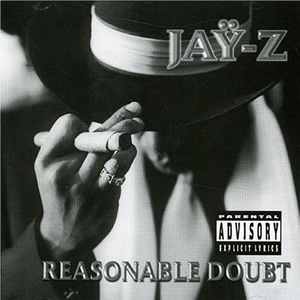
Jay-Z’s debut album, Reasonable Doubt, celebrated its 30th anniversary on June 25, 2026. This past weekend, we got to see Jay commemorate the album as well as the 25th anniversary of The Blueprint. I’m, admittedly, doing this at the eleventh hour. At least it’s not midnight, I guess. However, I wanted to throw my two cents out there about the album I consider Jay’s best work.
As DAR Sports and Media mused in their review of Reasonable Doubt versus Blueprint 1, the 1996 album captures Jay-Z at his hungriest. It’s an album where Shawn Carter introduced himself to the world as a whole. The then-26-year-old had been around for a bit, through his few lines on “Hawaiian Sophie,” the classic “7 Minute Freestyle” with Big L and “Show & Prove.” However, this was the first time we had a full body of work from the rhymesayer.
And unlike most of Jay’s later albums, this was a pure “rap-rap” album. I know, that sounds elitist, but it’s the truth. It’s an album that you’d only get from someone who’s coming up in the game, a la Nas’s Illmatic or Lupe Fiasco’s Food and Liquor. It focuses on its storytelling, to draw listeners in, then smacks them with bars upon bars upon bars of lyricism and “real talk.” It is one of the most-popular examples of what some call “mafioso rap.” As such, it doesn’t give us overly pop-friendly production, even with its singles and their allusions to glitz and glamour.
Additionally, even though the album features Biggie, no one’s seen as bigger than anyone else. After all, Jay more than held his own on “Brooklyn’s Finest.” I especially love the dueling bars we get from both, as it’s one of the essential songs when it comes to that format. You get equal parts cypher and a look at rap royalty and royalty-to-be engaging in their natural habitat. In addition to the Biggie feature and Mary J. Blige’s hook on “Can’t Knock The Hustle,” we get features from artists such as Jaz-O, Foxy Brown and Memphis Bleek. These all stand the test of time. They aren’t there for show and are about providing the best experience for the listener as well as the overarching theme of the album: the process of “getting it out the mud” and living the high life as a result. This is especially true since Foxy and Bleek were up-and-comers just like Jay.
Sure, “Ain’t No N*gga” and “Feelin’ It” were hits. “Ain’t No N*gga” was featured on the Nutty Professor soundtrack, after all. Even still, you simply couldn’t deny Jay’s swagger, bravado and lyricism even on those cuts. They weren’t just about mass appeal, they were little films that added to the mystique of Jay-Z and his cohort. “Feelin’ It” was also unlike most of what was played on the radio in 1996. Even now, you’re not going to find many jazz lounge-esque piano-driven rap songs in rotation on, say, Baltimore’s 92Q. It remains one of a few.
And yes, “Can’t Knock the Hustle” is one of the best R&B-aided rap songs of the 1990s. The story behind the Mary J. Blige collaboration is one that highlights the struggles of an up-and-comer just as much as the song itself. Simply put, it was hell for Roc-A-Fella to get labels to sign off on Mary’s collaboration, just like it was with Biggie’s verses. The song’s Wiki page features an extended quote from an older Combat Jack interview on the song, detailing this. If only Complex preserved their archives. Nevertheless, the story Combat Jack relays is why “Can’t Knock the Hustle” only has a lyric video and live performances of it as visuals–such as The Carters performing it at the Reasonable Doubt 30th Anniversary show.
However, nothing on the album felt like it was really “made” for the charts. Instead, the album in whole felt tailor-made for the young hustlers, the grinders (legal and illegal ones), the dreamers, and those who wanted to make something for themselves. Reasonable Doubt also stands apart for me from other albums because of its lack of fluff. Every song hits the way it needs to and, if one tries to remove/cut something, they’re cutting the overall arch and message of the project. It’s an album that sticks with you, because of its story and its honesty.
Plus, if we can get personal, “Can I Live” is my all-time favorite Jay Z song.
When I say that “Can I Live” was one of the songs that inspired me to rap, I mean that sincerely. The beat, produced by Irv Gotti, sampled Isaac Hayes’ “The Look of Love,” which my mom would play often. The intro was something out of a movie and set the tone for the song and the album, even though it was halfway through the project. Jay’s flow here was methodical and matched the thumping, thematic beat. That said, you could still feel the emotion behind every bar and every punchline. Plus, for me, hearing the opening lines “while I’m watching every n*gga watching me closely/my sh*t is butter for the bread, they wanna toast me?” Even as a kid (who shouldn’t have been listening to Jay-Z but I digress), I had the screwface on. I can mostly attribute that to the conviction we hear in Jay’s voice. It’s calm and methodical, yes. But there’s also a bit of menace in his voice, as if to say “if you try to take this chance from me, I’ll end you.”
Overall, Reasonable Doubt, to me, is Jay-Z’s Sistine Chapel, his Untitled (1982), his Thriller (or his Bad). It’s just as important in 2026 as it was in 1996, for reasons including Jay’s hunger, lyricism, beat selection and the album’s overall story. If you’ve never heard Reasonable Doubt, stop wasting time on SOTB and go do so. It’s an album I’d recommend you listen to even if it wasn’t celebrating a birthday this year. This one is a classic, without a…reasonable doubt. Sorry, I had to.


