
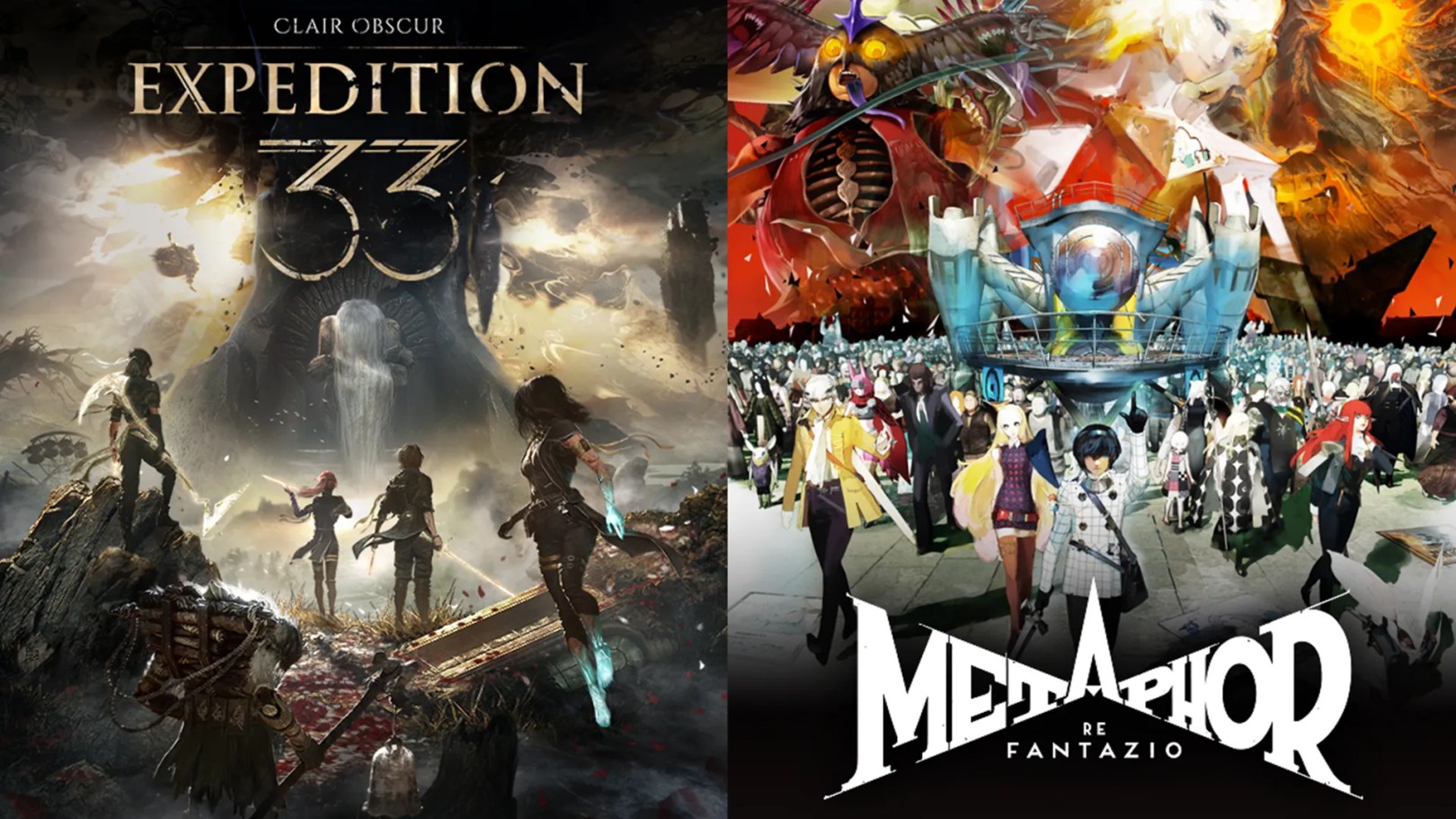
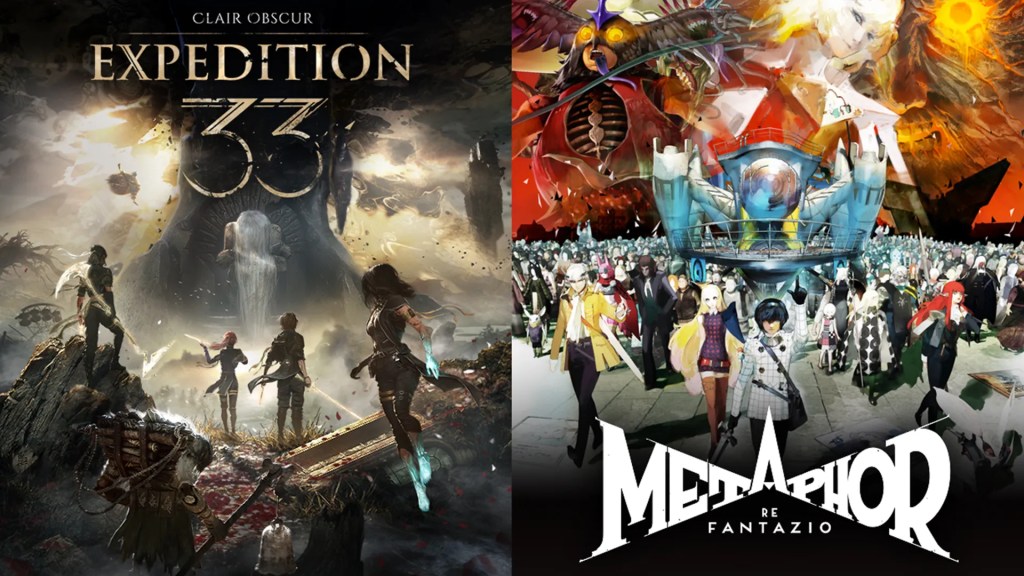
Metaphor: ReFantazio, Atlus’s 2024 award-winning high-fantasy RPG and 2025’s Clair Obscur: Expedition 33, a Sandfall Interactive release that’s also won multiple awards, are two shining example of gaming done right. One (Metaphor) is a traditional JRPG with anime-heavy visuals. The other (E33) is more of a love letter to the JRPG subgenre, while doing its own thing with many JRPG devices. As a fan of gripping stories, I’ve played both. Since I’ve done so, I acknowledge they cover similar themes. In fact, they do so in, at times, very similar ways. So which one handles their story “better?”
For those who hate reading, tap out now. If you’re expecting a 100% spoiler-free discussion, also stop reading. You’ve been warned.
“We Must Accept Things As They Are, Not How We Want Them To Be”: Expedition 33’s Take on Loss and Trauma
In so many words, Clair Obscur: Expedition 33 is what happens when you take the end-of-the-world plot devices often found in JRPGs and mix them in with end-of-the-world plot devices often found in Western media–specifically French cinema and art.
Over the course of 40-60 hours, it delivers a story about people fighting against an otherworldly existential threat (The Paintress). The Paintress is a Goddess-like entity who, essentially, performs their own annual purge of its world’s denizens. That purge, the gommage, claims the lives of people of a certain age. In a word, it’s traumatic and reminds me of Thano’s snap, down to people turning into dust and fading away.
As such, there are those who venture out, every year, to stop this process before there are no people left and the world ends. During each expedition, their respective parties get a bit closer to their end goal. In doing so, though they ultimately fall, they attempt to leave enough behind “for those who come after” to keep the fight against existential erasure going. Anime fans may understand these vibes, as they’re very reminiscent of Gurren Lagann‘s overarching plot (not to mention–spoiler alert–the act of Simon becoming the drill that creates the Heavens).
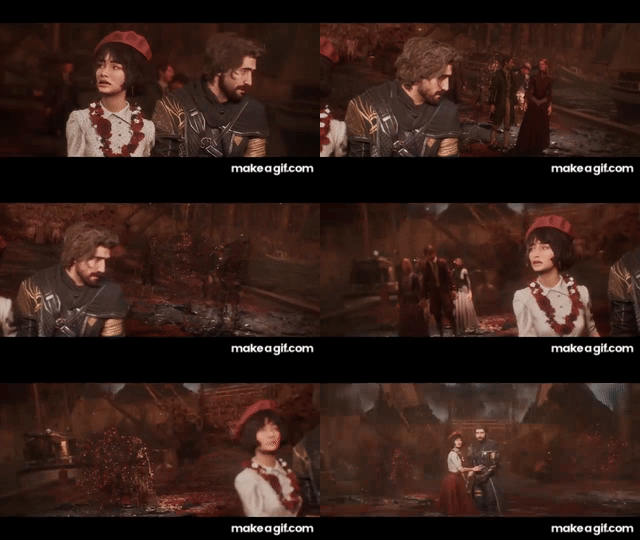
During the titular expedition, we end up getting a story that takes a very hard look into family dynamics, loss, and survivor’s guilt. We’re introduced to characters who’ve lost someone important in one way or another. One of whom is Maelle, a youngish woman who’s introduced as the “kid sister” archetype ally for the fakeout main character, Gustave. If you’ve played the game, you know why I say that. Maelle is initially your typical “plucky youngster in a world of death in despair,” though there’s always a hint of sadness to her gumption. There’s also a hint that there’s more to her than we intially see. We get introduced to Verso, a mysterious man who’s hellbent on destroying The Paintress and her seemingly maniacal ally, Renoir. We eventually learn that part of Verso’s desire to kill Renoir stems from the fact that Renoir is Verso’s father. Characters such as the widow Sciel, Gustave’s friend/expedition-mate Lune, and gestral Monoco join the cause, aiming to end The Paintress’s cycle of grief and destruction.
As the story continues for Expedition 33 (both the party and the game itself), we get a deep dive at what happens when survivor’s guilt combines with unresolved trauma. The desire to change the outcome of a traumatic incident–instead of accepting and heal from it–becomes a drug of sorts, for the heroes and the villains.
For our heroes, they eventually do accept their losses. But they still somewhat obsess over them, wishing things went differently. Using these losses and their grief as fuel to take down The Paintress, we get to a point in the story where the drug of running from and/or avoiding unresolved trauma almost engulfs them. For our villains, this “drug” leads to a creation of (spoiler alert) an alternate dimension where magic, fantasy and such exist, mostly based on stories told to a certain someone. We get an epic–albeit somewhat formulaic–reveal about Maelle. Through this, we also learn that The Paintress and those who are a part of her forces aren’t entirely “bad.” Instead, they are all incredibly mentally and emotionally scarred by their losses and their own inability to move on from them.
This fight is incredible. And, like the rest of this piece, it’s a massive spoiler (I did warn you, after all).
Essentially, everyone, at one point or another, has an “it should’ve been me” moment. What matters, though, is how each character deals with it. Through the 40+ hours of Clair Obscur, our cast learns to grieve, heal and make a decision for themselves how to progress. With that in mind, the player is left with a choice to make for Maelle and company in the game’s ending hours. You can either help the characters, including The Paintress, begin healing–or continue to let them all live in their fantasy world(s). It comes down to the phrase “you either die a hero, or you live long enough to see yourself become the villain.” Why, you ask? Well, either option results in loss and heartbreak to some degree. There is no true happy ending. Instead, we’re give one of two endings that push the characters forward–either to progress or further into their own oblivion.
As the credits roll, both choices end up hammering home a very valid, albeit somewhat brutal, point. While it sucks, loss is a part of life. Trauma is a part of life. As much as we want to avoid it and fight against it, we are, in some ways, born to ultimately die. That’s not to say we should give in and accept death right out of the gate, though. No, Clair Obscur makes it be known that it’s what you do with–and as a result of–that loss, trauma and death that ends up defining who you are, how you live, and how/if you truly heal.
Heavy stuff, for sure. Aided by incredible voice acting and a more-grounded art direction than its anime-leaning counterpart, it’s the type of game that people would say “absolute cinema” over. And, well, they’d be right. The game is incredible, though I don’t consider it a genre-defining or genre-saving game. My main gripe is that, while the story is amazing, it also feels a bit shorter than I would’ve preferred. I would’ve loved to have more time with the world of the game, learning more of its mythos. However, the time we get with Expedition 33 is time well-spent.
“Fantasy Is A Curse Sweet In Seeming”: Metaphor‘s Take on Loss and Trauma (Also Racism)
Metaphor: ReFantazio, on the other hand, is what happens when you do a similar story and ramp up the anime vibes to 11. I mean, it is an Atlus game, so that’s to be expected. Where Metaphor differs right from Clair Obscur is that it begins its story as one more about political intrigue and the most unsutble racism this side of the internet.
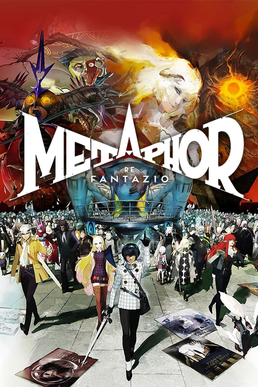
In the Kingdom of Euchronia, there are a multitude of different fantasy races. One race, the Elda, are looked at as less than filth. I’m talking people spit on the Elda at best ,and think of them as the reason for all the world’s problems at worst. One of these problems includes the existence of massively monstrous beings knowns as “humans” (you read that right). These humans are, in a phrase, nightmare fuel that’re seemingly designed in homage to Dutch painter Hieronymus Bosch’s portrayals of demons. They were once normal beings that, due to magical poisoning and trauma, mutated into monsters that rampage through the kingdom.
King Hytholadeus V is someone who’s very kumbayah about his kingdom and its diversity (for reasons that’re revealed as the story progresses). He’s seen as a great king by many. However, he’s also seen as someone who’s ridiculously idealistic to the point of being almost fantastical in his views. This doesn’t sit right with, well, mostly anyone else in power. That’s especially true of the game’s Griffith from Berserk proxy, army officer Louis Guiabern. Before we get any credits outside of the Atlus logo really, Louis kills the King. Graphically and succinctly, I might add, especially for a game rated T for “Teen.”
The king’s son, the rightful heir to the throne, is off somewhere in a faraway part of the kingdom and needs to be revived/rescued. Louis, because he’s evil personified, starts utilizing the Humans to advance his aspirations. Essentially, he get them, unleashes them, lets them raise hell and eventually kills them while garnering support as a savior. That’s not even a spoiler because he outright says as much and is introduced in the game proper as someone who’s slayed his fair share of humans.
Enter Will, a young heterochromic Elda man who’s portrayed as the Prince’s friend, and his fairy companion named Gallica. And yes, he looks a bit like Makoto Yuki from the Persona 3 games. I’m 97% sure he’s not related to Door-kun in any way, though.
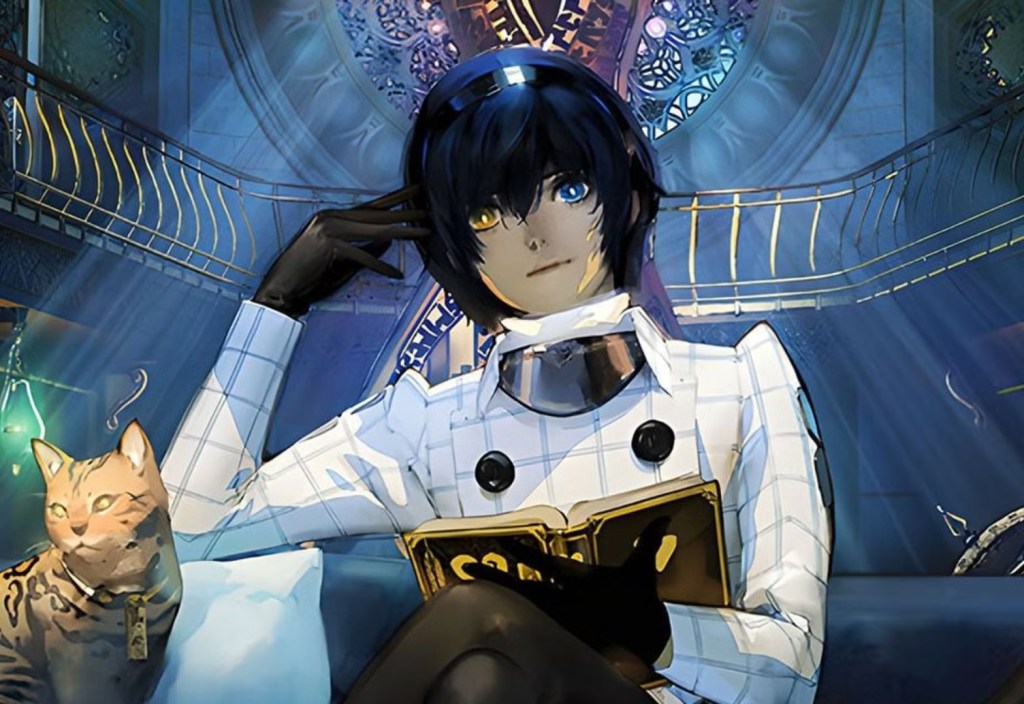
Although they initially don’t know why, Will and Gallica have been tasked with rescuing the Prince, restoring order to the kingdom and aiding the Prince in reclaiming what’s rightfully his. In order to do so, Will enters into the Tournament for the Throne (it is an anime-heavy JRPG, after all) as the Prince’s proxy. Will needs to gain the support of the kingdom against various other contestants, including Louis. In doing so, Will must prove his worth and test his might. Will gains allies who’ve been wronged, by Louis and the world at large. These allies include a grieving, ostracized father (the elder Heismay), an orphan cared for–and betrayed by–Louis (Basilio), and a knight who laments and internalizes her perceived failures (Hulkenberg).
Through the power of bonds and chosen family, they band together against the false king-to-be. While this is happening, Will is aided by a mysterious but powerful “librarian” named More who’s “trapped” in another dimension. You’ll understand the quotes if you know the game. We don’t know a heap about More for the first two-thirds of the game, even with his bond events. That is, except :
- as a librarian, he has a book and knows more than he should about Euchronia, considering he’s “trapped”
- he’s actively trying to break free from being “trapped” because he wants to help the new king restore order
- he’s connected to Will more than he’s willing to disclose and
- he evades questions about this connection through the general guise of “all will soon be revealed”
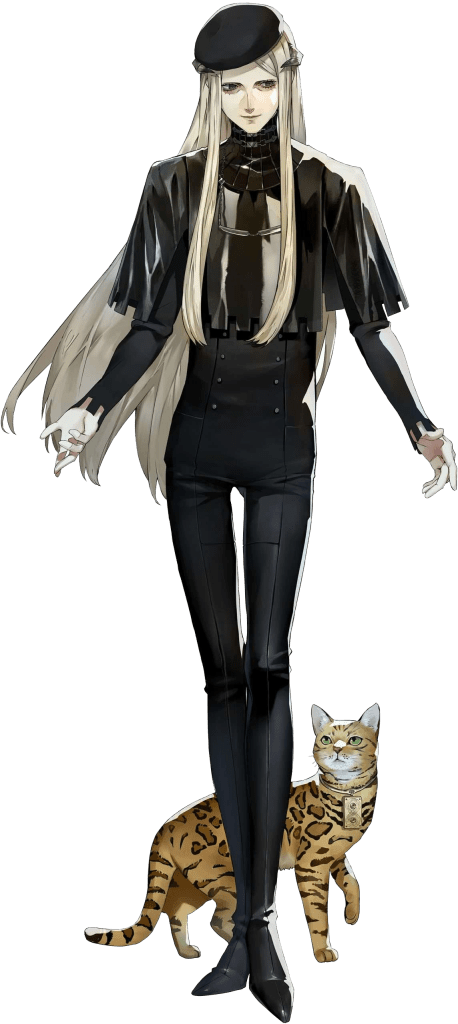
Through the first 30-40 hours, it does its own thing and plays like Persona meets high fantasy, with a heap of political intrigue. It’s less Clair Obscur and more Code Geass in some ways. Through the first 30-40 hours, its main similarity to Clair Obscur is that both have creatures that’re created by a power that is just to eradicate anything living in their world and maintain some sort of effed-up status quo. Well, those creatures and the power of bonds/community, and the indelible nature of the “human” spirit personified through its characters. Where the game becomes more like Expedition 33‘s final plot is also in its last third.
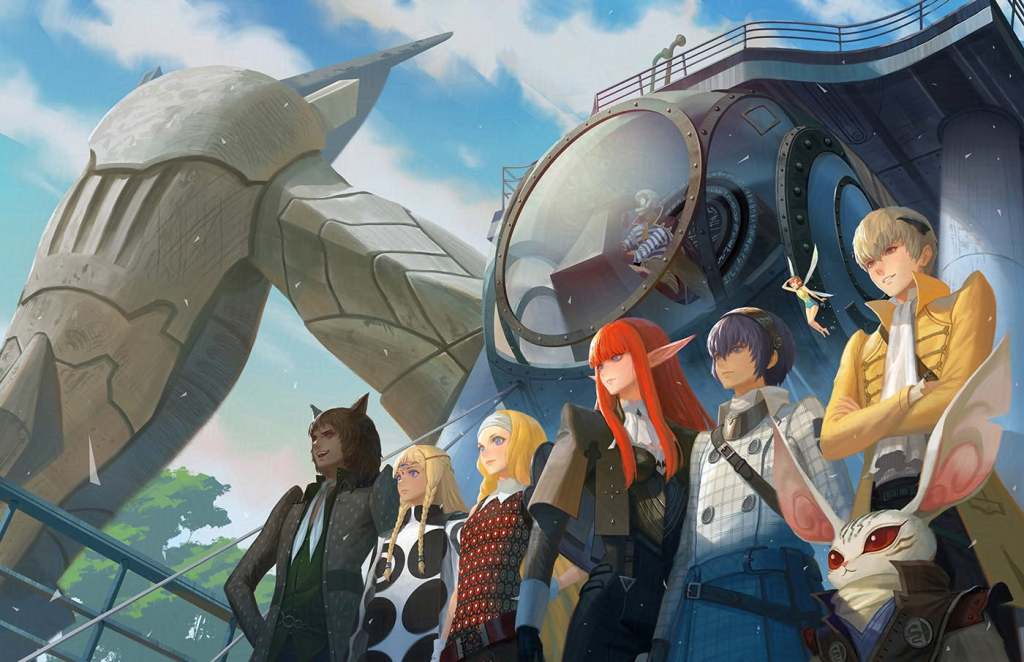
It’s revealed that Will is heavily connected to the Prince and the King, not to mention the monstrous humans. The connection is a great plot twist, but also one that ends up being so obvious it’s painful (just like the E33 twists). In this revelation, Will awakens to his “true self” and gains an endgame anime power boost. He also has to confront his own trauma and past, while making universe-altering decisions. Many of these decisions are brought on by the fact that More is revealed to be a creation/manifestation of someone very important to the plot. More is also dealing with his own fate and familial trauma, which is tied by many red strings to that of Will’s. The world of Euchronia is revealed to be equal parts fantastical creation and the result of eons of a general overindulgence in magic,(kind of) loosely tying the game in with the Shin Megami Tensai series. Battles happen, people die, stories are finished, and we’re set up with a final battle between Louis and Will and his party.
Before that battle, as he begins to awaken to his true self, Will is given a choice. Either he can accept the fantasy (or join with Louis) or rebel against the fantasy. Should he accept the fantasy or join with Louis, things end in a very dark way. Should he rebel and continue the fight, Will and his party fight to and do save his world, allow More’s essence to finally rest in peace, end the reign of the humans, and lead Euchronia to prosperity and more kumbayah vibes. Traumas are dealt with, people grow and heal and Will ends racism like he was a minority Cody Rhodes. The end. It gets a bit hamfisted in its ending stages, but is still an amazing game with a lot to say. My main gripe is that, unlike E33, I wish it was a bit shorter.
Verdict: Does Metaphor or Clair Obscur Do Its Story “Better?”
When it comes to which game deals with its characters’ trauma (and trauma resolution) better, there’s no “definitively better” game. They’re both great at what they do–and how they get to their conclusions. Ultimately, it all boils down to the player and what they’re looking for from a story. If you want a more-optimistic resolution while still dealing with trauma, family and “running away with the help of fantasy?” I’d say Metaphor is the better game in the handling of its story. If you go in looking for something that deals with its characters’ overall and familial trauma in a more melancholic way, while still speaking on “running away into fantasy?” You may lean towards Clair Obscur being the better game. If you haven’t played either, and I haven’t spoiled the games too much for you, give them a shot. If you have played one or both, my Facebook profiles and comments sections are open.
Just don’t DM me, please.

 speedonthebeat.com